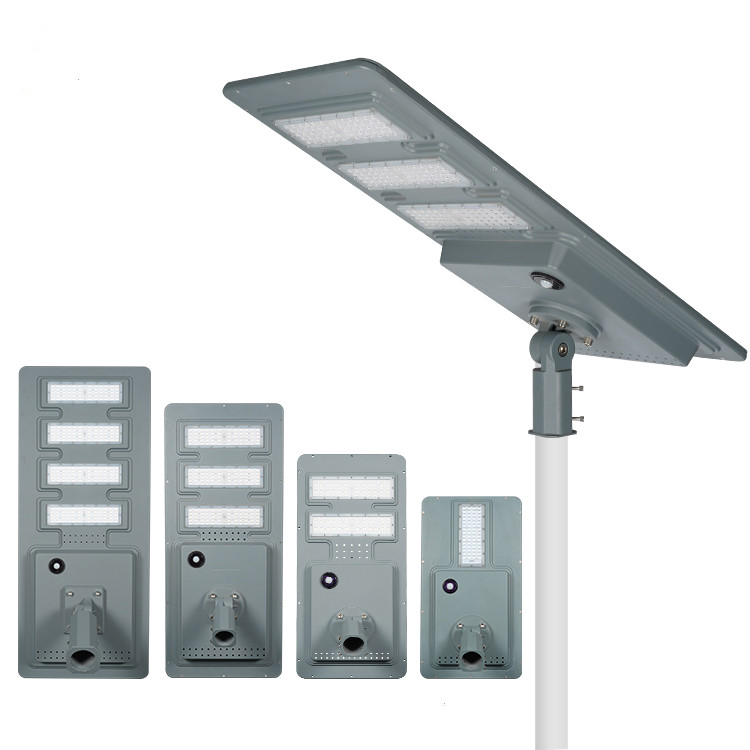
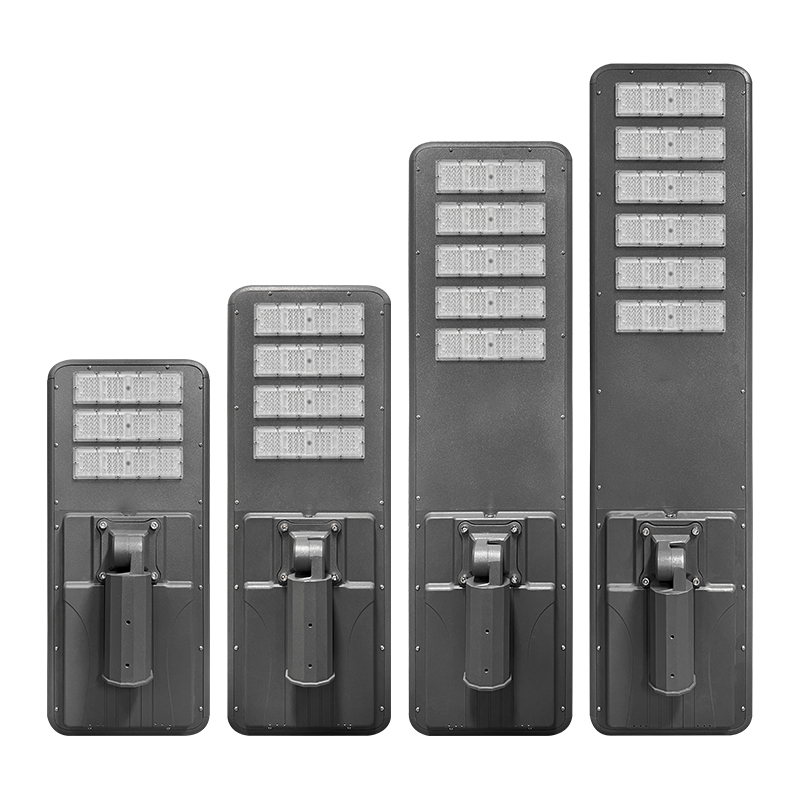
How to Choose the Right Solar Pole Lights for Outdoor Use
2026-05-20
If you have worked on outdoor lighting projects before, you probably already know this situation: two solar pole lights may look almost identical in a quotation sheet, but after installation, their real performance can be completely different.
One system continues working reliably for years. Another starts losing brightness after a rainy season, the battery no longer lasts through the night, or maintenance teams begin receiving complaints from local residents and project owners.
This happens quite often in municipal roads, industrial parks, farms, parking lots, and rural infrastructure projects. The problem usually is not the LED itself. In most cases, the real issue comes from system matching — the solar panel, battery, controller, heat dissipation, and pole configuration were never properly designed to work together.
Many buyers focus too much on wattage because higher wattage sounds more powerful. But in real outdoor projects, a well-designed 100W solar light can easily outperform a poorly configured 200W model.
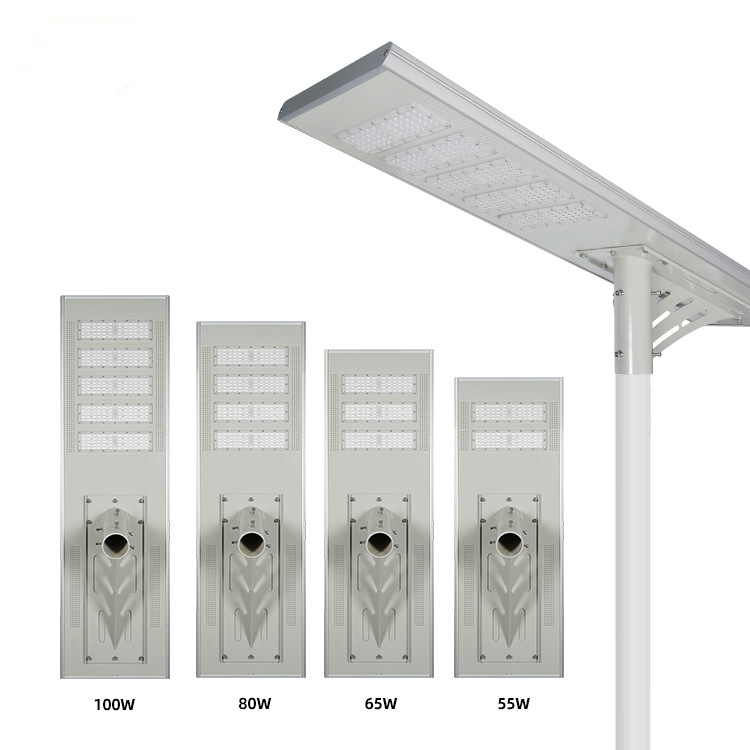
1. Why Some Solar Pole Lights Perform Poorly After Installation
1.1 Battery Capacity Looks Good on Paper, But Not in Real Conditions
One of the most common problems comes from low-quality lithium batteries.
Some solar street manufacturers use recycled battery cells or reduce actual battery capacity to lower costs. At first, the lights may operate normally. After several months, however, the backup time starts dropping noticeably.
This becomes especially obvious during continuous cloudy or rainy weather. The light may only work for a few hours at night before dimming or shutting off completely.
LiFePO4 batteries usually perform much better for outdoor solar lighting because they handle high temperatures more steadily and provide longer cycle life.
1.2 Charging Efficiency Is Often Overlooked
A solar street light is only as reliable as its charging system.
In many low-cost products, the solar panel efficiency is too low, or the controller cannot properly manage charging and discharging. As a result, the battery never fully charges even during sunny days.
This is why experienced project contractors pay close attention to:
· Solar panel conversion efficiency
· MPPT controller performance
· Charging speed
· Battery protection systems
Good charging efficiency becomes much more important than simply increasing lamp wattage.
1.3 Poor Heat Dissipation Shortens Lifespan
Heat is one of the biggest hidden problems in outdoor lighting.
Some street lights use thin housings or low-quality materials that trap heat inside the lamp body. Over time, high temperature affects the LED chips, controller stability, and battery lifespan.
This is why many professional projects prefer die-cast aluminum housing. A solid aluminum structure improves heat dissipation and helps the entire system remain stable for long-term outdoor use.
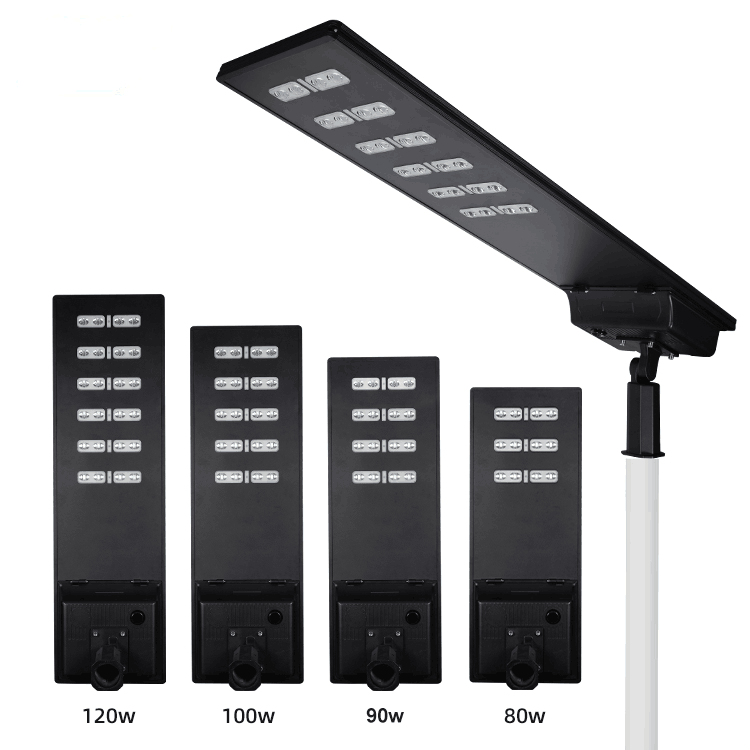
2.1 Start with the Actual Installation Environment
Before selecting specifications, first evaluate where the lights will be installed.
For example:
· Municipal roads require stable all-night lighting
· Parking lots need wider beam coverage
· Factory roads usually require higher brightness
· Villages and rural roads often prioritize lower maintenance
· Coastal projects need stronger corrosion resistance
The installation environment determines the correct combination of pole height, beam angle, battery size, and solar panel configuration.
Many lighting problems happen because products are selected based only on price instead of actual application conditions.
2.2 Focus on System Balance Instead of Maximum Wattage
A reliable solar lighting system works because every component is correctly matched.
A balanced system includes:
· Efficient solar panels
· Stable lithium battery
· Reliable MPPT controller
· High-lumen LED chips
· Proper heat dissipation
· Correct pole height and spacing
For example, installing an oversized lamp on a weak battery system usually creates more problems than benefits. The light may appear bright at the beginning of the night but become dim after several hours because the battery cannot support continuous high-power output.
In many municipal projects, stable brightness throughout the night is far more important than extremely high brightness for only a short period.
2.3 Choose Intelligent Control Functions
Modern solar pole lights are much smarter than traditional systems.
Features such as motion sensors and intelligent dimming can significantly improve efficiency.
For example:
· The light operates at 30% brightness when no movement is detected
· It automatically switches to 100% brightness when vehicles or pedestrians approach
· The controller adjusts power output according to remaining battery capacity
This type of intelligent control helps extend lighting time and reduce unnecessary battery consumption.
For roads with low nighttime traffic, these functions can greatly improve long-term reliability.
2.4 Pay Attention to Pole Quality
Many buyers focus heavily on the lamp but overlook the pole itself.
In outdoor environments, the pole must handle:
· Strong wind
· Heavy rain
· Corrosion
· Long-term structural stress
Hot-dip galvanized steel poles are commonly used because they provide stronger corrosion resistance and longer service life.
For coastal or humid environments, proper surface treatment becomes even more important.
3. How to Avoid Future Maintenance Problems
3.1 Do Not Oversize or Undersize the System
Some projects try to reduce costs by selecting smaller batteries or weaker solar panels. Others blindly pursue high wattage without considering actual energy consumption.
Both approaches usually create long-term problems.
A properly designed system should consider:
· Average sunlight hours
· Rainy season conditions
· Lighting duration requirements
· Installation height
· Road width
Good system matching reduces maintenance costs far more effectively than simply buying the cheapest product.
3.2 Regular Cleaning Still Matters
Even high-quality solar panels lose efficiency when dust, pollution, or bird droppings accumulate on the surface.
Periodic cleaning is simple but very effective for maintaining stable charging performance.
This is particularly important in industrial areas, farms, and roads with heavy dust.
4. Final Thoughts
Choosing the right solar pole lights is not only about comparing prices or wattage specifications. Long-term reliability depends on whether the entire system is properly designed for the real installation environment.
In many successful projects, the difference is not who used the most expensive product. The difference is who selected the right combination of solar panel efficiency, battery capacity, controller quality, pole structure, and lighting design.
For municipal roads, industrial parks, parking lots, rural infrastructure, and commercial projects, a properly configured solar lighting system can operate reliably for many years while significantly reducing maintenance and electricity costs.
If you are planning a large outdoor lighting project and are unsure about battery configuration, pole height, or lighting design, working with an experienced solar lighting team can help avoid many common installation problems later.
5. FAQ
5.1 What is the best pole height for solar street lights?
The ideal height depends on the application. Residential roads usually use 4–6 meter poles, while municipal roads and highways often require 8–12 meter poles for wider lighting coverage.
5.2 How long should a solar pole light work at night?
Most commercial solar pole lights are designed to operate for 10–12 hours per night. High-quality systems can also support 2–3 consecutive rainy days.
5.3 Are LiFePO4 batteries better for solar street lights?
Yes. LiFePO4 batteries offer better thermal stability, longer lifespan, and improved safety compared to ordinary lithium batteries, making them ideal for outdoor solar lighting.
5.4 Why do some solar street lights become dim after several months?
Common causes include poor battery quality, weak charging efficiency, insufficient solar panel power, or poor heat dissipation inside the lamp housing.
5.5 What waterproof level is recommended for outdoor solar pole lights?
IP65 is generally the minimum standard for outdoor projects. IP67 provides stronger protection for areas with heavy rain or high humidity.
5.6 Do motion sensors help save energy?
Yes. PIR or microwave motion sensors reduce power consumption by lowering brightness when no movement is detected and increasing brightness only when needed.
5.7 What material is best for solar street light poles?
Hot-dip galvanized steel and aluminum alloy are the most commonly used materials because they provide strong corrosion resistance and long service life outdoors.
5.8 How do I choose between integrated and split solar street lights?
Integrated solar lights are easier to install and maintain, while split systems may provide larger battery and solar panel capacity for high-power municipal projects.